
Here are the top ten garage door and opener issues homeowners face:
1. Broken Torsion or Extension Springs
Solution: Springs cannot be repaired — they must be replaced. They come in pairs so always replace both.
Call a Pro: Always. Springs are under extreme tension and are the #1 cause of serious garage door injuries. This is never a DIY job.
2. Garage Door Won’t Open or Close
Solution: Check the power source, remote batteries, and that the disconnect cord hasn’t been pulled. Look for an obstruction in the safety sensor path.
Call a Pro: If power and sensors check out and the door still won’t move, the issue is likely the logic board, motor, or a broken spring — call immediately.
3. Door Reverses Before Closing All the Way
Solution: Clean and realign the safety sensors at the base of the door tracks. A small misalignment or dirty lens is usually the culprit.
Call a Pro: If realigning sensors doesn’t fix it, the close-force limit settings on the opener need professional adjustment to avoid damaging the door or opener.
4. Loud or Unusual Noises
Solution: Lubricate the rollers, hinges, and springs with a silicone-based or garage door specific lubricant. Never use WD-40 — it attracts dirt.
Call a Pro: Grinding or popping sounds after lubrication point to worn rollers, a loose chain, or a stressed spring about to fail. Don’t ignore it.
5. Door Opens or Closes Unevenly (Crooked)
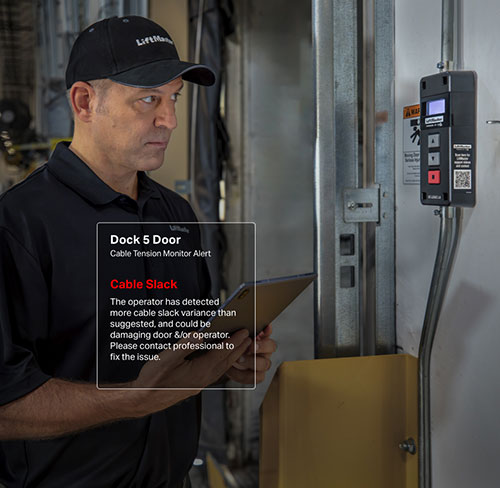
Solution: Visually inspect the cables on both sides of the door. An uneven door almost always means one cable has slipped off the drum or is fraying.
Call a Pro: Immediately. A door hanging off-track or with a compromised cable can come crashing down. Do not use the door until inspected.
6. Remote or Keypad Not Working
Solution: Replace the battery first. If that doesn’t fix it, reprogram the remote using the Learn button on the opener motor unit.
Call a Pro: If reprogramming fails and the wall button still works, the remote receiver or logic board may be failing — a technician can diagnose it in minutes.
7. Frozen or Stiff Door in Cold Weather
Solution: Check if the bottom weatherseal has frozen to the ground — this is common in Utah winters. Break the seal gently and lubricate the weatherstrip.
Call a Pro: If forcing a frozen door caused the opener to strain, get the motor and springs inspected. Forcing a stuck door is a leading cause of spring and cable damage. Spray w-d40 on the concrete where the rubber lands on the concrete, this will help reduce or eleminate freezing to the ground.
8. Garage Door Off Track
Solution: Do not attempt to use the door. Disconnect the opener and leave it alone.
Call a Pro: Always. An off-track door is a safety emergency. The panels, cables, and track are all under stress and can collapse unexpectedly without proper tools and training.
9. Opener Motor Runs But Door Doesn’t Move
Solution: Check if the disconnect cord (the red rope) was pulled — this happens accidentally more than you’d think. Reattach it by pulling the cord toward the door until it clicks.
Call a Pro: If the trolley carriage is reconnected and the door still won’t move, the drive gear or trolley inside the opener has stripped and needs replacement.
10. Worn or Damaged Weatherseal
Solution: Weatherseal is the rubber stripping along the bottom and sides of the door. It peels and cracks over time — especially in Utah’s heat and freeze cycles. Replacement kits are available at hardware stores for the bottom seal.
Call a Pro: If the side and top seals are deteriorating as well, or if the door frame itself is damaged, a full weatherseal replacement with proper fitting is worth having done professionally to prevent water and pest intrusion.
The Pattern to Remember:
- Springs, cables, and off-track doors → always call a pro, no exceptions
- Sensors, remotes, and weatherseal → reasonable DIY starting points
- Anything that involves the door moving under its own weight → when in doubt, call