
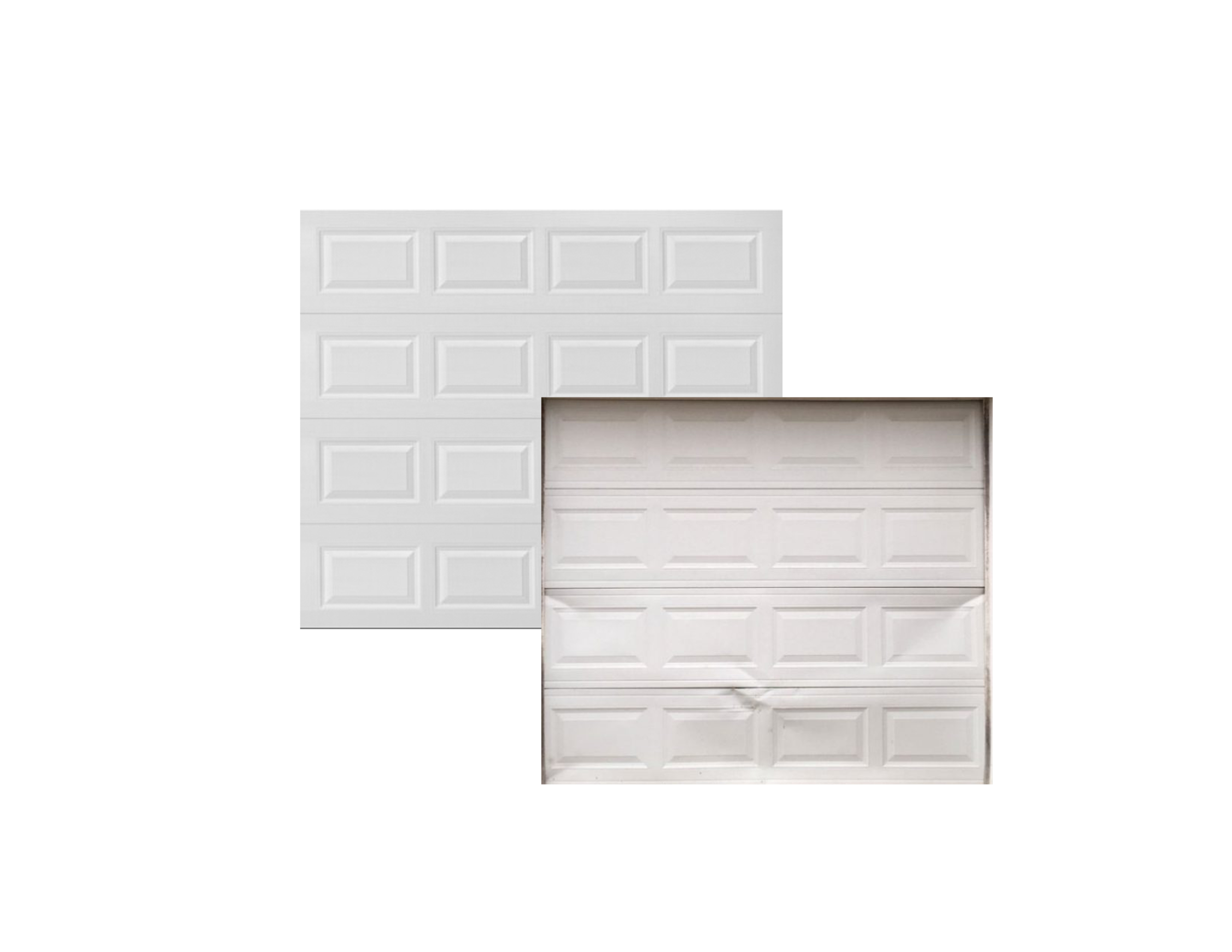
Top 5 Reasons to Replace Your Garage Door
Most homeowners don’t think about the garage door until it stops behaving — the shaking, the grinding, the panel that never quite lines up. The frustrating part is knowing whether you’re looking at a $200 plus fix or a door that’s past saving. Here are the five reasons replacement usually makes sense, and what to do about each one.
1. Cracked, Dented, or Rotting Panels
Backing into the door, hail, or years of Utah sun and freeze-thaw cycles all take a toll. Wood panels swell and rot; steel panels dent and rust at the seams. Once a panel is compromised, it stops carrying its share of the door’s weight — which puts the strain on the springs, rollers, and opener instead.
The solution: If the damage is limited to one or two panels on a newer door, a panel replacement is the cost-effective fix. If the door is older than 15 years or the damage spans multiple sections, replacing the full door costs less than chasing panels one at a time.
2. Constant Repairs Adding Up
Springs, rollers, hinges, and cables all wear out on a predictable schedule. When you’re calling for service two or three times a year, you’re not solving a problem — you’re renting time on a door that’s at the end of its life.
The solution: Add up your last 24 months of repair bills. If they’re approaching half the cost of a new door, replacement is the better financial decision. A single service call also tells you a lot — ask your technician for a straight answer on remaining lifespan, not just a parts quote.
3. Loud Operation, Shaking, and Uneven Movement
A door that jerks, hangs crooked, or sounds like it’s coming apart is telling you something is out of balance. Sometimes it’s a worn part. Sometimes the section joints and hardware have loosened past the point of adjustment.
The solution: Start with a professional balance and safety inspection — plenty of noise issues come down to rollers, hinges, or lubrication. If the door won’t hold a balance after service, the structure itself is failing and replacement is the fix.
4. High Energy Bills and an Unusable Garage
Single-layer, uninsulated doors are common on Utah homes built before the 2000s, and they’re brutal in our climate. Summer heat turns the garage into an oven; winter cold pulls heat out of any room sharing a wall with it. If your garage is attached, that door is one of the largest uninsulated surfaces on your house.
The solution: Replace with an insulated door rated R-12 or higher. Double- and triple-layer steel doors with polyurethane insulation hold temperature far better, run quieter, and resist dents. If your garage doubles as a shop, gym, or storage for anything temperature-sensitive, this is the upgrade with the most day-to-day payoff.
5. Outdated Safety and Security Features
Doors and openers made before 1993 may lack photo-eye sensors and auto-reverse. Older openers use fixed codes that can be copied. Thin single-layer doors can be pried at the bottom seal. If you have kids, pets, or anything worth stealing in the garage, these aren’t small gaps.
The solution: At minimum, have the auto-reverse and photo-eyes tested. A modern door and opener package adds rolling-code encryption, battery backup, reinforced bottom brackets, and smartphone monitoring so you know when the door is open and who opened it.
When to Replace a Panel Instead of the Whole Door
Panel replacement is real and often the right call — but only under specific conditions. Here’s the honest breakdown.
Replace the Panel When
- The door is under 10–15 years old and otherwise operating smoothly
- Only one or two sections are damaged, and the rest are straight and solid
- The damage is cosmetic or localized — a dent, a crack, a single rotted section
- Your model is still in production, so a matching panel is available in the same style, gauge, and finish
- Tracks, springs, rollers, and hardware are in good shape and don’t need replacing anyway
Replace the Whole Door When
- The door is 20+ years old — panel costs won’t buy you meaningful remaining life
- Three or more panels are damaged — at that point you’re paying near-full-door pricing for a patchwork result
- The panel is discontinued — mismatched sections look worse than the original damage and can hurt resale
- The top section is damaged where the opener arm mounts — this is a structural failure point
- The door is warped, rotted, or delaminating across sections rather than in one spot
- You want insulation, quieter operation, or a modern look — a panel swap won’t get you any of that
The Practical Test
Get a quote for both. If the panel repair comes in above 40–50% of a new door, replace the door. You’ll get a full warranty, current safety hardware, better insulation, and a finish that actually matches instead of a close-enough panel bolted to an aging frame.